MCAT Psych/Soc Section: Complete Content Breakdown
Five Foundational Concepts — With High-Yield Topic Guidance

Foundational Concept 6 — Sensing, Perception & Cognition~25% • BIO/PSYCH
Biological, psychological, and sociocultural factors influence the ways individuals perceive, think about, and react to the world.
6A — Sensing the Environment HIGH YIELD
Signal detection theory · Absolute & difference thresholds · Weber’s law · Sensory adaptation · Vision, hearing, taste, smell, touch · Proprioception & vestibular system
Signal detection theory and Weber’s law appear in clinical and experimental passage contexts
6B — Making Sense of the Environment HIGHEST YIELD
Gestalt principles (proximity, similarity, closure) · Depth perception · Perceptual constancy · Memory encoding & retrieval · Sensory, working & long-term memory · Proactive & retroactive interference · Piaget’s 4 stages · Vygotsky’s ZPD
Memory types and forgetting theories are among the most consistently tested Psych/Soc concepts
6C — Responding to the World HIGH YIELD
James-Lange, Cannon-Bard & Schachter-Singer theories · Universal emotions (Ekman) · Facial feedback hypothesis · Eustress vs. distress · General Adaptation Syndrome · HPA axis & cortisol · Problem- vs. emotion-focused coping
Know all three emotion theories cold — the AAMC tests the mechanistic differences between them
Download Full AAMC Content Outline

Foundational Concept 7 — Behavior, Motivation & Social Influence~35% • PSYCH/SOC
Biological, psychological, and sociocultural factors influence behavior and behavior change.
7A — Individual Influences on Behavior HIGHEST YIELD
Neurotransmitters (dopamine, serotonin, GABA, glutamate, norepinephrine, ACh) · Sleep stages (NREM 1–3, REM) · Classical conditioning (CS, UCS, UCR, CR; extinction; generalization) · Operant conditioning (reinforcement schedules; Skinner) · Observational learning (Bandura) · Maslow’s hierarchy · Drive-reduction & incentive theories · Psychological disorders (DSM-5)
Operant conditioning terminology (positive/negative reinforcement vs. punishment) is a top-tested source of student errors
7B — Social Processes & Influence VERY HIGH YIELD
Conformity (Asch) · Obedience (Milgram) · Social facilitation & inhibition (Zajonc) · Social loafing · Deindividuation · Bystander effect & diffusion of responsibility · Group polarization & risky shift · Groupthink · Social norms & deviance
Distinguish between conformity (normative), compliance, and obedience — the AAMC tests each specifically
7C — Attitude & Behavior Change HIGH YIELD
Cognitive dissonance (Festinger) · Elaboration likelihood model (central vs. peripheral route) · Foot-in-the-door & door-in-the-face · Self-perception theory · Norm of reciprocity · Attitude formation & change
Cognitive dissonance passages appear on nearly every MCAT form in patient health behavior contexts

Foundational Concept 8 — Self, Identity & Social Cognition~20% • PSYCH/SOC
Psychological, sociocultural, and biological factors influence how we think about ourselves and others, and how we interact.
8A — Self-Identity & Personality HIGH YIELD
Self-concept, self-esteem & self-efficacy (Bandura) · Erikson’s 8 psychosocial stages · Freud’s psychosexual stages & defense mechanisms · Humanistic theories (Rogers: unconditional positive regard) · Big Five/OCEAN (Openness, Conscientiousness, Extraversion, Agreeableness, Neuroticism) · Locus of control
Erikson’s stages are consistently high-yield; know the key conflict at each stage and the age range
8B — Social Cognition HIGHEST YIELD
Fundamental attribution error · Actor-observer bias · Self-serving bias · Stereotypes, prejudice & discrimination · Implicit vs. explicit attitudes · In-group/out-group bias · Stigma (social & self-stigma) · Heuristics (availability, representativeness, anchoring)
Attribution theory questions are extremely high-frequency — master all three biases and be able to distinguish them in novel scenarios
8C — Social Interactions HIGH YIELD
Social roles & norms · Impression management & presentation of self (Goffman) · Emotional intelligence · Aggression (frustration-aggression hypothesis) · Altruism & cooperation · Social networks & social capital
Goffman’s dramaturgical theory (front stage/back stage) appears regularly in patient-provider and clinical interaction passages
Foundational Concepts 9 & 10 — Social Structure & Inequality~20% • SOCIOLOGY
Cultural and social differences — and unequal access to resources — profoundly influence health and well-being.
9A — Understanding Social Structure HIGH YIELD
Sociological theories: functionalism, conflict theory, symbolic interactionism · Social institutions (family, education, healthcare, religion) · Culture: norms (folkways, mores, taboos), values, beliefs · Agents of socialization · Manifest vs. latent functions · Bureaucracy & formal organizations
Apply sociological theories to healthcare delivery passages — a core AAMC testing theme for medical relevance
9B — Demographic Characteristics & Processes MODERATE YIELD
Demographic transition model · Birth, mortality & fertility rates · Aging population & disability · Immigration patterns · Population growth models · Epidemiological concepts & health statistics
Demographic data interpretation in tables and graphs appears frequently in passages
10A — Social Inequality HIGH YIELD
Social stratification: class, caste, meritocracy · Social mobility (vertical, horizontal, intergenerational) · SES and health outcomes · Race, gender & health disparities · Intersectionality · Poverty & access to care · Implicit bias in medicine
Health disparities by race, SES, and gender are a core AAMC theme — expect multiple passages on these topics every exam
Research Methods & Experimental Design: The #1 High-Yield Area (~10–12%)
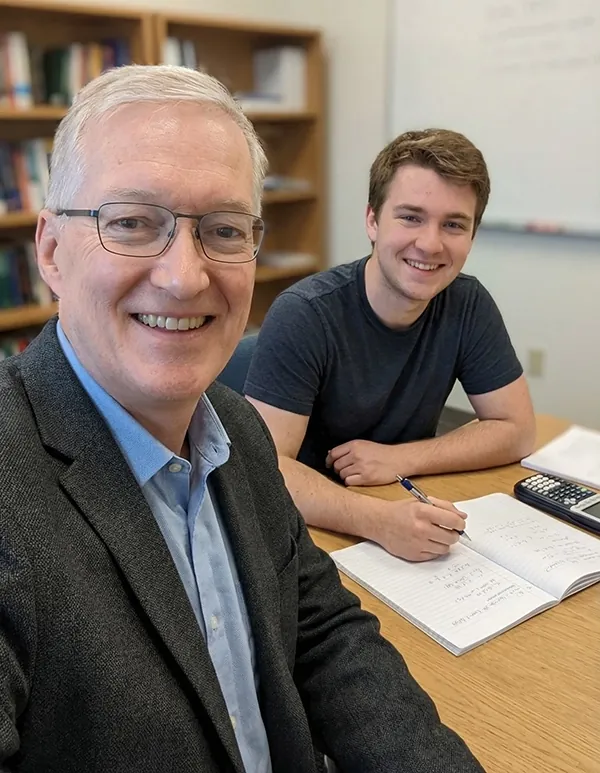
Tested throughout all five FCs, experimental design accounts for approximately 10–12% of Psych/Soc — more than any single named content topic — yet it receives the least study time from most pre-med students. These questions appear in every passage: understand the design, identify the variables, recognize the limitations. Dr. Donnelly builds a systematic framework for attacking these questions that transfers to every passage on the section.
Study design identification — experimental (random assignment, causal inference), quasi-experimental, correlational, cross-sectional, longitudinal, cohort, case-control, and meta-analysis
Variable identification — independent variable (manipulated), dependent variable (measured), confounds, operational definitions, and extraneous variables
Controls & blinding — control vs. experimental groups, single-blind, double-blind, placebo controls, random assignment vs. random sampling
Validity & reliability — internal validity (confound control), external validity (generalizability), construct validity, and inter-rater reliability
Download Full AAMC Content Outline